Rob Hirst and Jim Moginie formed Farm in Sydney in 1972. They added vocalist Peter Garrett and guitarist Martin Rotsey, and became Midnight Oil.
They’re known for their taut, politically charged songs, but their early work has shades of progressive rock and pub-rock. Their 1982 album 10, 9, 8, 7, 6, 5, 4, 3, 2, 1 helped to define them. It was their first top ten album in Australia, with a new wave sound and the single ‘The Power and the Passion’. They enjoyed a worldwide hit with 1987’s ‘Beds Are Burning’.
They’re not my favourite band of their era, but I respect their ability to communicate political and environmental messages without sacrificing their musicality.
Midnight Oil broke up in 2002, so Garrett could focus on his political career. They reformed in 2016, although Hirst passed away in 2026.
Midnight Oil Album Reviews
Midnight Oil

1978, 6.5/10
Midnight Oil is one of those fascinating debut albums where a band hasn’t found their signature sound, instead throwing lots of different things against the wall. ‘Used And Abused’ sounds like early 1970s glam rock, while ‘Nothing Lost – Nothing Gained’ is an eight-and-a-half-minute progressive rock epic.
Moginie later described the recording studio as “a small living-room sized rectangle…. The recording was pure joy.” There’s not as much aggression as you’d expect – the album’s sometimes criticised for not capturing their live fury. The band formed their own label, Powderworks, to release their debut.
It’s odd to hear the loud, virtuoso guitars on the opener ‘Powderworks’, closer to metal than you’d expect. ‘Head Over Heels’ is a taut new-wave rocker that points the way forward. And the closing guitar duel on ‘Nothing Lost – Nothing Gained’ is the record’s best moment.
The band would quickly jettison most of these songs from their live set, but it’s still a fascinating debut.
Head Injuries

1979, 7/10
Head Injuries is the last Midnight Oil album to feature their original bassist, Andrew “Bear” James, who quit the band due to ill health. It’s similar to their debut, with interesting traces of other genres still hanging around.
The introduction to ‘Section 5 (Bus to Bondi)’ still sounds like progressive rock, while ‘Naked Flame’ opens with an uncharacteristically soulful yelp from Garrett. But crucially, Garrett sounds more assured here, after a tentative performance on the debut. Leszek J. Karski produced Head Injuries and encouraged Midnight Oil toward a more direct sound. Moginie later wrote that “he was brutally direct, all for tightening up arrangements and cutting out superfluous sections, and had a punk-pop ethos.”
Accordingly, some songs anticipate the stripped-down, tuneful sound that they’d specialise in later. ‘Back on the Borderline’ and ‘No Reaction’ are both excellent early Oils efforts, and they’re worth exploring.
Head Injuries still feels embryonic, but it’s a step forward.
Bird Noises (EP)

1980, not rated
Midnight Oil released two EPs in the 1980s. They’re not just leftovers, but strong works in their own right. Bird Noises continues the punk-infused sound of their first two records, although there’s a surprising left turn with the surf instrumental ‘Wedding Cake Island’. The tough ‘No Time For Games’ is one of Midnight Oil’s best early songs.
Place Without a Postcard

1981, 7/10
Midnight Oil travelled to the UK to record their third album, working with legendary producer Glyn Johns. He gives them a bigger, stadium-rock sound. The band were dissatisfied, but it’s the right direction – with their meaningful lyrics and anthemic songs, they’re calling out for a big sound. The songs aren’t always memorable, but it feels like the first proper Midnight Oil album after a couple of albums searching for a sound.
Even the best song, ‘Armistice Day’, is most noteworthy for its intense vocal performance and lyrics. Opener ‘Don’t Wanna Be The One’ is energetic and tuneful, while the band’s protest lyrics are effective on ‘Lucky Country’.
Surely there’s some relief from atomic art
Lucky Country
And the fragile state of world events
With clowns who love the kings and power and the mutant media babes
Wanking on dreams and fashions and toilet paper flowers
Midnight Oil figured out the foundation of their 1980s sound on Place Without A Postcard, but the great tunes wouldn’t arrive until the next album.
10, 9, 8, 7, 6, 5, 4, 3, 2, 1

1982, 9/10
10, 9, 8, 7, 6, 5, 4, 3, 2, 1 is often singled out as Midnight Oil’s best album. They combine their hard-driving rock with an experimental edge. The group twist 1980s synthesisers and tinny drum tones to serve their ends. Rob Hirst later said, “we were one of the first Australian bands to get into sequencers and synthesisers… it managed to combine all the aggression and frustration of Midnight Oil with some amazing studio stuff courtesy of Nick [producer Nick Launay].”
After the atmospheric opener ‘Outside World’, the album stays in conventional rock territory for the next few tracks including ‘Short Memory’, an explosive list of human rights abuses. But the rest of the album almost eschews rock altogether, exploring altogether stranger territories.
The singles ‘US Forces’ and ‘Power and the Passion’ are fundamentally bizarre. The stop-start dynamics of ‘US Forces’ and the lengthy drum solo of ‘Power and the Passion’ are merely the most unsettling features of strange multi-part songs. The weird loping riff and rhythm of ‘Maralinga’ create another strange atmosphere. ‘Scream in Blue’, a conceptual effort about the guilt of adultery, starts off as a psychedelic instrumental before tailing off into a pleasant piano ballad.
10, 9, 8, 7, 6, 5, 4, 3, 2, 1 is a fascinating record, Midnight Oil’s aggressive pub-rock colliding with new wave technology.
Red Sails in the Sunset

1984, 7/10
Midnight Oil’s fifth album is their most wide-ranging. Rob Hirst later explained that “our brief at the time was just to throw away any boundaries regarding what music could be or should be. For that reason some people felt it was some unholy, unfocused mess, and other people regard it as the best album we ever made.” So it ranges from industrial rock like ‘Harrisburg’ to the mainstream 1980s pop of ‘Helps Me Helps You’.
It’s fascinating, but it doesn’t play to the bands strengths. The jangly ‘Kosciusko’ is one of their best songs, predicting their next record. And the single ‘Best of Both Worlds’ wraps the industrial textures into a hard-charging single. But it’s often a bunch of interesting but flawed missteps.
If you’re a Midnight Oil fanatic, the ambition of Red Sails in the Sunset might become your favourite. But they have better, more accessible records.
Species Deceases (EP)

1985, not rated
Midnight Oil’s second EP doesn’t feel like leftovers. Instead, released a year after Red Sails in the Sunset, it’s tougher and more direct than its predecessor, like the band successfully refining their early punk-infused sound.
Species Deceases was successful, going platinum after two weeks in Australia. It’s deserved – in particular, ‘Hercules’ is one of the band’s best songs, a perfect blend of aggression and tunefulness. ‘Progress’ is a tough opening track too.
Four tracks is just the right length for Midnight Oil to showcase their punk mastery.
Diesel And Dust

1987, 8.5/10
Midnight Oil’s towering shaven-headed vocalist Peter Garrett ran for the Australian Senate as an anti-nuclear campaigner in the mid-1980s, only just missing out on election. But Midnight Oil is an even better forum for his social and political concerns.
Midnight Oil toured remote Australian Indigenous communities with the Warumpi Band and Gondwanaland in 1986. This experience inspired Diesel and Dust, with its themes of Indigenous Australian struggles and environmental causes. They released the lead single ‘Beds Are Burning’ shortly before Australia’s bicentenary, reminding Australians about their history of mistreating the country’s original inhabitants.
Diesel And Dust begins powerfully; ‘Beds Are Burning’ moves with a funky bass line and a direct message (“It belongs to them/Lets give it back”), while ‘Put Down That Weapon’ is menacing. Other highlights include the anthemic ‘Warakurna’ and the closing ‘Gunbarrel Highway’. The latter was regrettably banned from the US version of Diesel And Dust – its absence weakens the album, as it’s much stronger than the penultimate ‘Sometimes’.
Diesel and Dust is fiery and tuneful, one of Midnight Oil’s finest records.
Blue Sky Mining
1990, 8/10
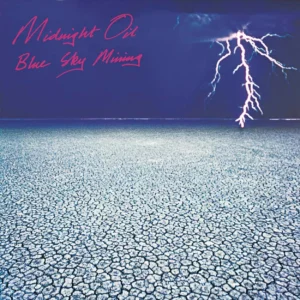
Midnight Oil’s first album of the 1990s is more sedate and restrained than before. Now a major act, they worked with producer Warne Livesey. Hirst later said “Warne’s whole thing was to get as close to aural perfection as you possibly could, or as close as we were ever going to get.” The band employ strings, adding to the serious, adult-contemporary atmosphere.
There are still energetic rockers like ‘Forgotten Years’ and the title track, but brooding pieces like ‘Mountains of Burma’ and ‘Antarctica’ set the tone. The hidden treasure is ‘Stars of Warburton’, a joyous, jangly rocker presumably expressing the pleasures of returning home after a long American tour. It ends a little limply – ‘One Country’ isn’t memorable enough musically to make a big statement, and ‘Antarctica’ is a slightly oddball closer.
Blue Sky Mine is a strong adult-contemporary record, although the best songs could have come from the Diesel and Dust era.
Earth and Sun and Moon
1993, 8/10
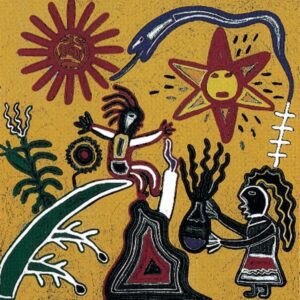
Midnight Oil’s eighth album is warm and jangly, full of acoustic guitars and harmonies. Moginie’s organ parts sometimes recall 1960s garage rock. Even though it was out of step with the dark rock sounds of the early 1990s, it’s a good approach for Midnight Oil. Garrett’s voice is so abrasive that sweetening their sound is a good move.
Opener ‘Feeding Frenzy’ mines 1960s garage-rock with spooky organ. The title track is pretty and jangly. The lead single, ‘Truganini’, was divisive – the Tasmanian Aboriginal Centre called for a boycott.
Earth And Sun And Moon is probably as deep as you need to go into Midnight Oil’s discography, unless you’re a hardcore fan, but it’s a strong record.
Breathe

1996, 6/10
Midnight Oil work with producer Malcolm Burn on Breathe. Burn had previously worked with Daniel Lanois on Acadie, and he gives the band an atmospheric sound. The arrangements are often minimal, with Garrett’s unusually relaxed vocals way out in front. It almost works – the biggest issue is that the 53-minute running time is too long for such a low-key, limited palette.
The first two songs are particularly minimal – ‘Surf’s Up Tonight’ features a low-key vocal from Garrett, as the chorus is almost spoken. Some of the stronger tracks feature a fuller sound, like ‘Time to heal’ and ‘Sins of Omission’. Emmylou Harris, a frequent Burns collaborator, provides backing vocals on ‘Home’.
Breathe features some strong material, but it needed a trim.
Redneck Wonderland
1998, 7/10
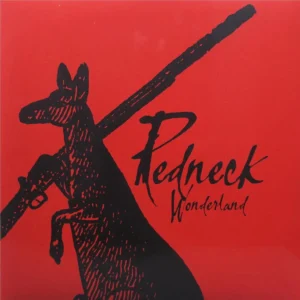
If Breathe was stripped back, Redneck Wonderland is amped up, bristling with aggression. The title was a reaction to Australia’s Pauline Hanson’s right-wing One Nation party. They were ascendant in the late 20th century, rubbishing climate change and undermining race relations.
There is an urgent need to renew our national focus and recognize our national strength of being a tolerant and diverse immigrant society that has no truck with old-world racism and paranoia.
Peter Garrett, Deseret
Midnight Oil modernise their sound, adopting electronic textures. The opening title track bristles with aggression, while ‘Concrete’ and ‘Cemetery in my Mind’ are hooky rockers. It’s not all aggressive – ‘The Great Gibber Plain’ is jangly, while Hunters and Collectors’ Jeremy Smith plays French Horn on the piano-based ‘Drop in the Ocean’.
Redneck Wonderland is impressively vital for a band in their third decade.
Capricornia
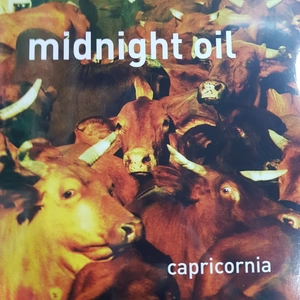
2001, 6/10
I never think of Midnight Oil as a particularly eclectic band. But Capricornia feels like a lesser facsimile of Earth and Sun and Moon, and underlines how seldom this band repeated themselves. It was the band’s last album before Garrett quit Midnight Oil in December 2002, to concentrate on his political career. Rob Hirst, Jim Moginie, and Martin Rotsey continued to work together in other bands, like The Break and Ghostwriters.
There’s a lot to enjoy with the band’s retro jangle, but it all feels a little tired here. The title track has the record’s most memorable hook, but it feels a touch slow and turgid, despite an energetic bridge. ‘Golden Age’ is a fine opener, while there’s some bite to the verse of ‘Under the Overpass’ and to ‘Mosquito March’.
Capricornia is typically hardworking, but it feels a little lethargic.
The Makarrata Project

2020, 6.5/10
Almost twenty years after Capricornia, Midnight Oil returned with The Makarrata Project. The Makarrata Project isn’t a conventional Midnight Oil album. The songs all feature Indigenous Australian vocalists. There are only seven tracks, and the closing ‘Uluru Statement from the Heart / Come on Down’ is a lengthy spoken explanation of the project.
It’s disjointed, but the best moments are the band’s freshest-sounding songs in years. The opening two songs recall the electronic textures of Redneck Wonderland – ‘First Nation’ and ‘Gadigal Land’ are both energetic and aggressive. Alice Skye sounds beautiful on ‘Terror Australia’, backed by delicate piano.
The Makarrata Project is disjointed, but features Midnight Oil’s most exciting moments in years.
Resist

2022, 7.5/10
Midnight Oil announced that their 2022 tour would be their last. While they’ve left the door open for further recording, Hirst’s passing means that Resist may be their final album. While their post-1990 albums have largely focused on a particular sound, Resist encompasses their full range of sounds, making it a suitable summation of their career. Even though longtime bassist Bones Hillman passed away in 2020, he still features on Resist.
Resist occasionally feels heavy-handed on tracks like ‘Reef’ – reminding you that Midnight Oil usually do a great job of not letting the message overrule the music. But largely it’s full of great songs – ‘Nobody’s Child’ is tough and hard charging, while ‘Tarkine’ is jangly and harmonised. Australian MOR legend Kamahl delivers a monologue on ‘The Last Frontier’.
If Resist turns out to be Midnight Oil’s final album, it’s a surprisingly satisfying effort.
10 Best Midnight Oil Songs




Read about the discographies of musical acts from the 1960s to the present day. Browse this site's review archives or enjoy these random selections:


I add new blog posts to this website every week. Browse the archives or enjoy these random selections:


Subscribe
Subscribe to receive new posts from Aphoristic Album Reviews.