

Bill Fay was born in London. He recorded two albums in his late twenties—1970’s Bill Fay and 1971’s Time of the Last Persecution. They failed to sell, and a third album, Tomorrow, Tomorrow & Tomorrow, was recorded around 1980 but never released.
Fay returned to regular life, working as a groundskeeper at a London park, then as a fish packer in a supermarket. But he kept writing and recording songs. In the late 1990s, a growing audience led to the rerelease of his albums. Like Judee Sill and Nick Drake, he enjoyed a sudden surge in popularity, championed by artists like Jim O’Rourke and Jeff Tweedy.
Up until 1998, when some people reissued my albums, as far as I was concerned, I was gone, deleted. No one was listening. But then I got the shock that people remembered my music. I was doing some gardening, and listening to some of my songs on cassette, and a part of me thought they were quite good. I thought, “Maybe somebody will hear them someday.” That same evening, 14 years ago, I got a call from a music writer telling me that my two albums were being reissued. A shock is not gonna get much bigger than that, David […] It was astonishing to me. I won’t ever really be able to believe that it happened. That’s how I feel about it. I had come to terms with the fact that I was deleted, but that I had always kept writing songs anyway and that was good enough
Bill Fay, Spin (2012)
Fay recorded three more studio albums before passing away in 2025. He’s most beloved for the apocalyptic visions of Time of the Last Persecution, inspired by the Biblical books of Daniel and Revelation.
Bill Fay Album Reviews
Bill Fay
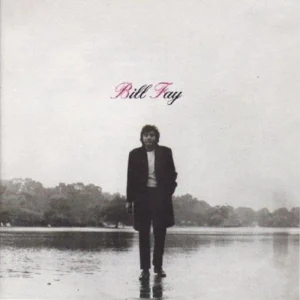
1970, 7.5/10
Fay’s debut album is the most uncharacteristic in his discography, with busy chamber-pop arrangements. It sometimes overwhelms the songs, diluting his sincerity (his best trait).
Generally, the more the orchestration stays out of the way, the better. ‘Be Not So Fearful’ is a straightforward piano ballad, and all the better for it. The exception is ‘Methane River’, where the full arrangement adds something, with a pretty motif in the quiet parts and a big riff later.
The CD reissue adds the 1969 single ‘Some Good Advice’. The B-side, ‘Screams in the Ears’, stands out – the muscular, swinging piano is an effective backdrop for Fay.
Bill Fay is a promising debut, but the orchestration holds it back.
Time of the Last Persecution

1971, 9/10
Fay’s second album draws on a 19th-century compendium of commentaries on the Biblical books of Daniel and Revelation. But Fay also draws comparisons to contemporary events – the title track is inspired by the same Kent State shootings that prompted CSNY‘s ‘Ohio’. It’s much rawer than the debut, and Fay’s piano and Ray Russell’s guitar work better than the debut’s orchestration. With the apocalyptic themes and dishevelled album cover, it’s an obvious candidate for cult status. It doesn’t disappoint – these songs are emotionally loaded, and the hooks stick.
Fay’s lyrics are the main appeal. Fay told Electric Eden that “It was the problems of the world that I was talking about, not my own problems. The world was going through heavy times – or our view of the world was a heavy world.” He chronicles fascism on ‘Pictures of Adolf Again’ and longs for peace on ”Til the Christ Comes Back’.
After years in the wilderness, Time of the Last Persecution is thankfully now recognised as a masterpiece.
Tomorrow Tomorrow and Tomorrow

Recorded 1978-1980, released 2005, 8/10
Fay returned to the studio in the late 1970s. But the results were never released until his late-career resurgence. But it’s a fascinating record – Fay assembles a talented, jazz-tinged band, updating his sound to 1970s art rock. It sounds like a singer-songwriter fronting Genesis or Pink Floyd. Spacey synths and guitar work well behind his earnest songs, and they’re succinct and impressionistic. ‘Planet Earth Daytime’ runs through multiple sections, but stays under five minutes, and it’s the longest song here.
The best songs are clustered toward the start of the record – ‘Strange Stairway’ and ‘Spiritual Mansion’ are searching and evocative. The title track boasts one of Fay’s loveliest piano lines. Curiously, ‘Goodnight Stan’ is reprised from his debut album.
Tomorrow Tomorrow and Tomorrow isn’t quite a lost classic, but it didn’t deserve to languish in the vaults for decades.
Life is People
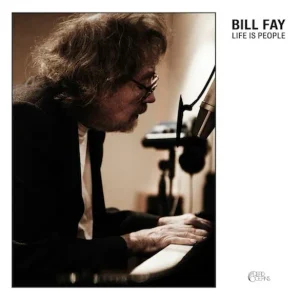
2012, 8/10
Despite his apparent lack of success, Fay never stopped writing songs. So when he returned to the studio, four decades after his last studio album, it was as if he had barely lost a beat. Guitarist Ray Russell and drummer Alan Rushton return from Time of the Last Persecution, adding to the sense of continuity. Fay donated the album’s proceeds to Médecins Sans Frontières.
Astonishingly, this record belongs proudly alongside his 1970s work. It’s more hopeful than before – the key track ‘The Healing Day’ is about reconciliation rather than judgement. ‘There Is A Valley’ is a terrific opener, while the bluesy ‘City of Dreams’ is another favourite. Wilco have featured ‘Be Not So Fearful’, and Fay returns the favour by covering ‘Jesus, Etc.’
Life Is People is impressive for an artist past retirement age.
10 Best Bill Fay Songs
- Be Not So Fearful
- The Healing Day
- Time of the Last Persecution
- ‘Til the Christ Comes Back
- Strange Stairway
- Methane River
- Screams in the Ears
- There Is A Valley
- Omega Day.
Related Posts and Pages


Read about the discographies of musical acts from the 1960s to the present day. Browse this site's review archives or enjoy these random selections:


I add new blog posts to this website every week. Browse the archives or enjoy these random selections:


Subscribe
Subscribe to receive new posts from Aphoristic Album Reviews.


